WE SCALE SOCIAL, ENVIRONMENTAL AND ECONOMIC BENEFITS OF SPACE ECONOMY ON EARTH AND IN SPACE.
WE OFFER CHIEF GROWTH OFFICER (CGO) AS A SERVICE
We help companies of every size, from startups to large enterprises to reach their ambitious business goals.
Let’s identify your challenges together, build a growth roadmap, and execute it together.
SPACE COMPANIES
What does your company need to become the next “unicorn” in the space industry?
NON-SPACE COMPANIES
What is needed to successfully integrate space into your current business model?
SELECT THE AREA(S) WHERE ADDITIONAL SUPPORT WOULD CREATE THE MOST VALUE FOR YOUR COMPANY
1. Strategy & Business Growth
2. Operations & Performance Excellence
3. Leadership, Governance & Change
4. Technology & Innovation
5. Sustainability & Risk Management
OUR COMPETITIVE ADVANTAGES
OUR SERVICE IS CUSTOMIZABLE
REFERENCES
Sustainable Space Economy (SSE) has worked with a wide range of companies and organisations.

Are you the next one?
MEET THE Head of the Chief Growth Officers’ (CGO) TEAM

TIMO MUSTONEN

TOP person to follow and TOP networker on LinkedIn.
Timo is connected with nearly 9,000 people across the global space ecosystem on LinkedIn.
That is an invaluable asset for engaging the right stakeholders across the global space ecosystem.
Timo has 25+ years of international working experience from enterprises (Nokia & Microsoft), space SMEs (Aurora Propulsion Technologies) and startup accelerators (AppCampus – Nokia, Microsoft and Aalto University).
He brings a rare blend of strategic leadership, change management, business development, project management and experience about working with cross‑functional teams.
He has worked with 25+ nationalities and hundreds of partner companies, delivering results in high‑stakes, innovation‑driven environments.
Feedback from the co-workers.
“I had the pleasure to work with Timo 1.5 years and always appreciated the pro-active ever-ready attitude to offer help in any operational issues and fixing those at lightning speed. Timo is a very balanced person with varied experience and knows the right questions to ask for getting the problem identified quickly and then find solutions to that. I would highly recommend Timo for running any sort of business operations small and simple to big and complex.”
“Timo’s philosophy is just-do-it. He always surprised me with what he could accomplish in the shortest amount of time. He is full of energy and does not get bogged down with no as answer. He has been able to get the task done which were considered impossible. He is consistent in his approach and always delivers the results.”
“Timo is an excellent organizer that can keep track of a huge number of issues at the same time. Additionally, Timo can push forward issues that encounter large amounts of internal friction and does not leave issues open because of the resistance they may encounter. While doing this. Timo is still able to remain diplomatic and in good relations with his colleagues.”
OUR VALUES
LEADERSHIP
Inspiring, guiding and empowering others toward a shared vision. It requires integrity, decisiveness, communication and adaptability to foster collaboration, innovation and meaningful progress.
ACCOUNTABILITY
Taking responsibility for actions, decisions and outcomes. It involves honesty, transparency and a commitment to ethical behaviour, ensuring trust and reliability in all endeavours.
INNOVATIVENESS
Ability to think creatively, challenge norms and develop new solutions, products, or ideas that improve efficiency, solve problems or bring meaningful change.
FOLLOW US ON SOCIAL MEDIA
FREQUENTLY ASKED QUESTIONS (FAQ)
We frequently receive questions about sustainable space economy.
(1) WHY THE SPACE ECONOMY MATTERS?
SPACE INDUSTRY IS BOOMING.
Private and public investment in space technologies has skyrocketed, driving a projected market value. McKinsey estimates that the global space economy will be worth $1.8 trillion by 2035, up from $630 billion in 2023.
Innovations like reusable rockets and micro-satellite networks are rapidly lowering costs and opening space to a diverse range of commercial players.
Technological innovation, private sector investment, global connectivity demands, government support & defence priorities and cross-industry applications are propelling the space economy’s rapid expansion.
Space is today a global endeavor. Technological advancements are driving cost reductions and enabling new capabilities, leading to a more accessible industry. Now, 90 nations, over 10,000 firms, and 5,000 investors contribute to its rapid growth. The global space economy, valued at $630 billion in 2023, is projected to reach $1.8 trillion by 2035. Space technology is increasingly integrated into various industries, creating value and fostering innovation. However, sustainability remains a critical challenge, as the space sector lags behind other industries.
SPACE INDUSTRY IS AN UNKNOWN OPPORTUNITY.
In 2023, Viasat conducted a global survey of 20,000 people across 11 countries, revealing widespread lack of awareness and concern about space.
97% viewed space as a threat, citing space junk and climate change as key worries. The findings highlight the urgent need to educate the public on space’s positive contributions.
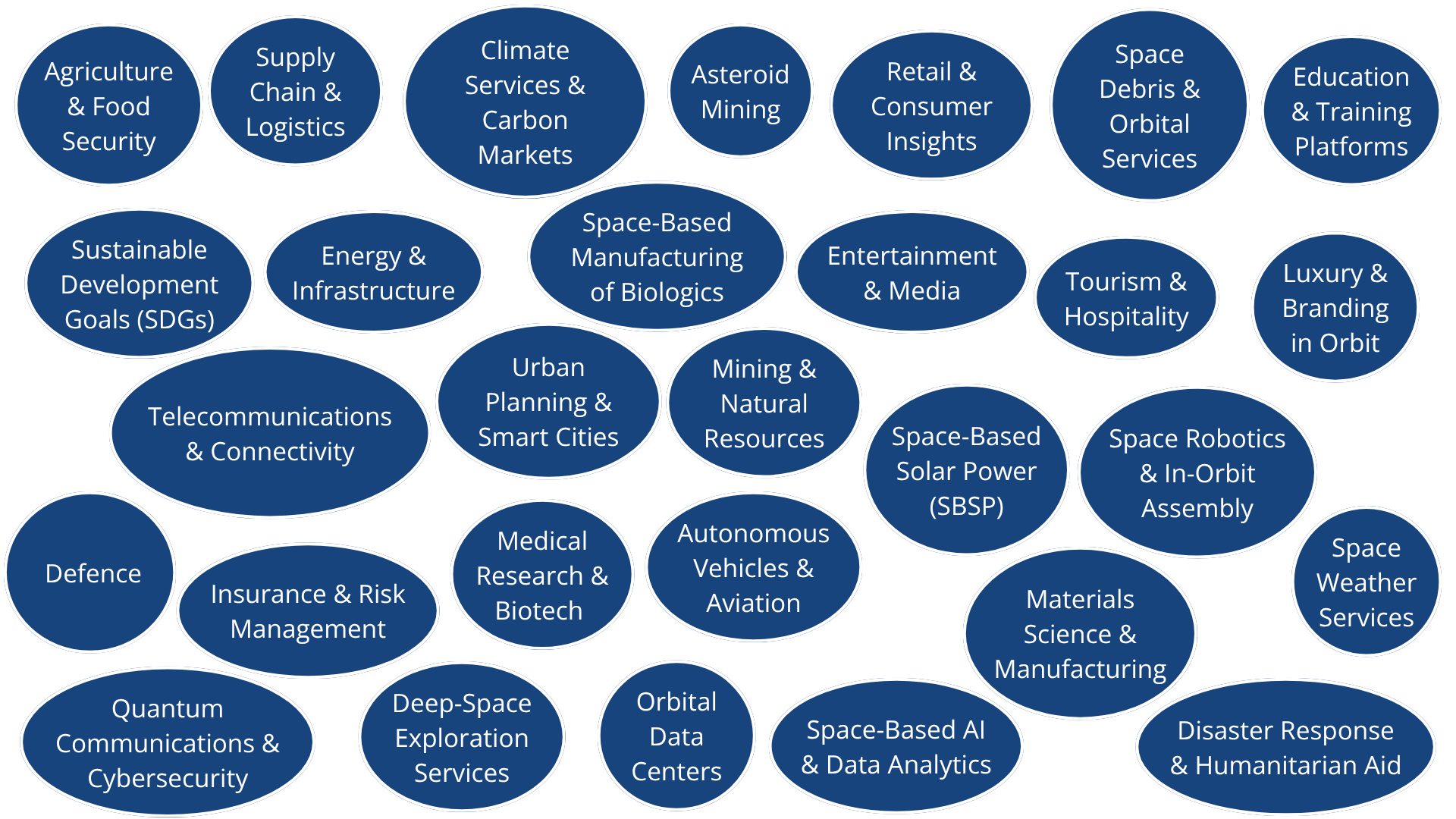
Space economy is a massive business opportunity for the space and non-space companies in multiple sectors.
(2) DUAL USE – IS IT A THREAT OR AN OPPORTUNITY?
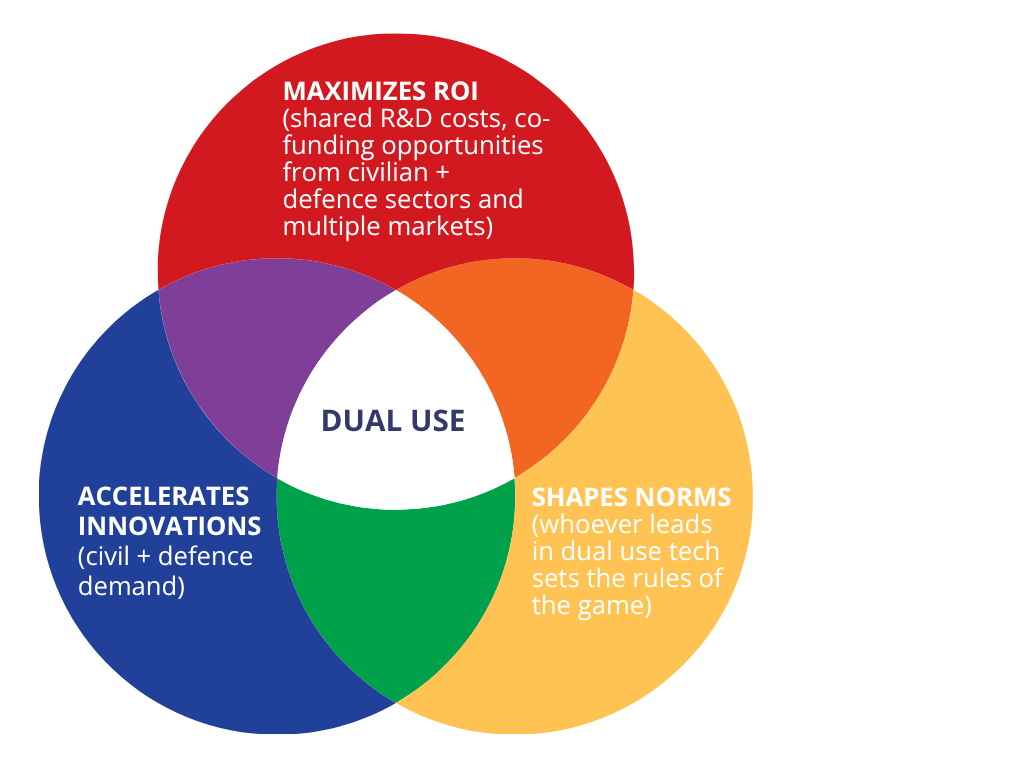
Dual-use space technologies can serve both civilian purposes, like communications and navigation, and military applications, such as surveillance or missile guidance.
This dual nature makes them powerful drivers of innovation but also raises concerns about security and governance.
Dual use is also the sweet spot because it aligns commercial incentives with national security needs and societal benefits.
It’s where innovation, economics, sustainability and geopolitics converge.
Government space programs spending reached already $135 billion in 2024.
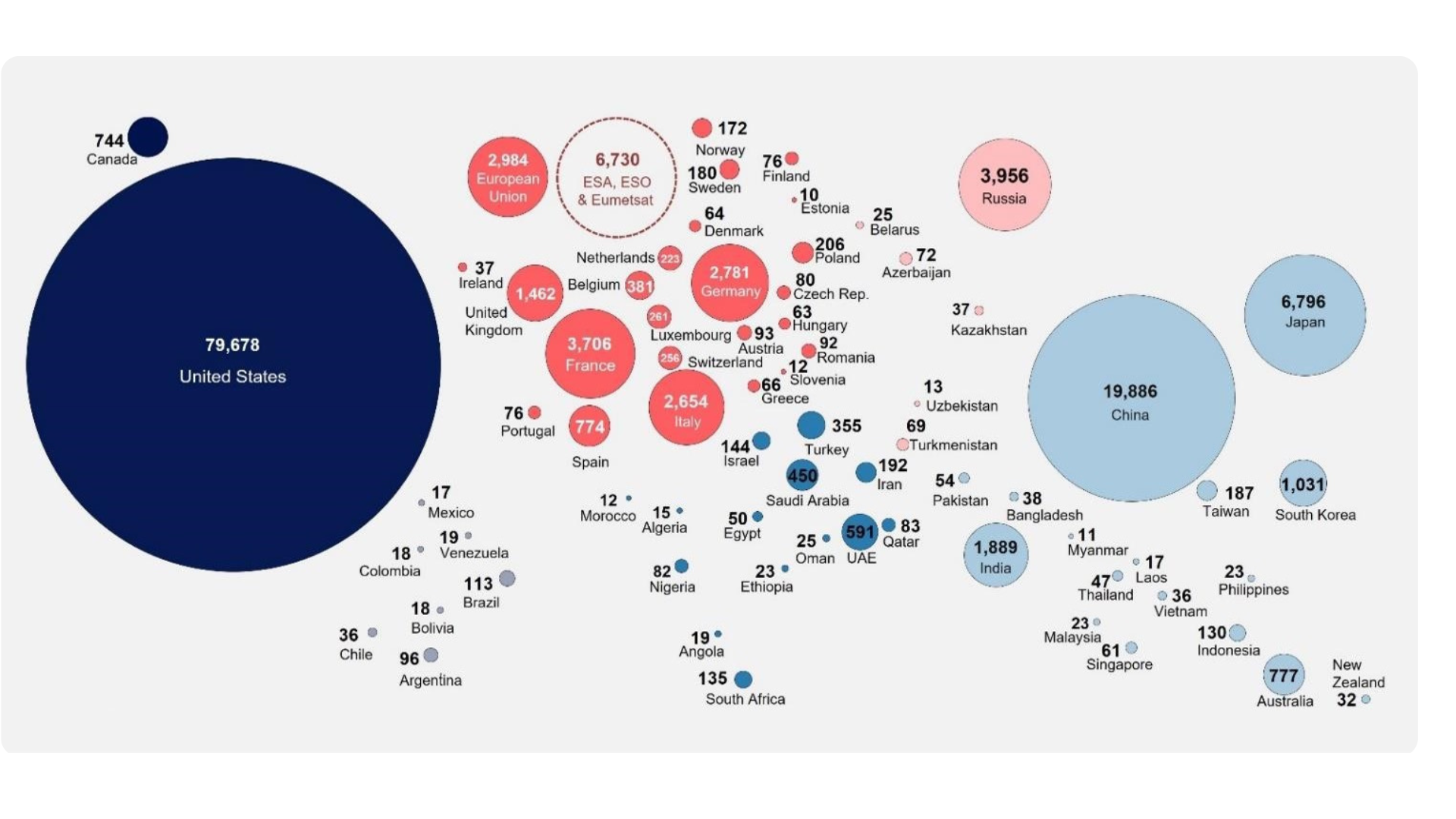
Source: The 24th annual Government Space Programs report by the consulting firm Novaspace. Only countries with a budget of at least $10 million are included on the map. European country budgets reflect contributions to ESA, ESO, and Eumetsat.
(3) HOW DO YOU DEFINE SUSTAINABLE SPACE ECONOMY?
A well-integrated space industry creates long-term economic, technological and environmental value while fostering innovation for both Earth and beyond.
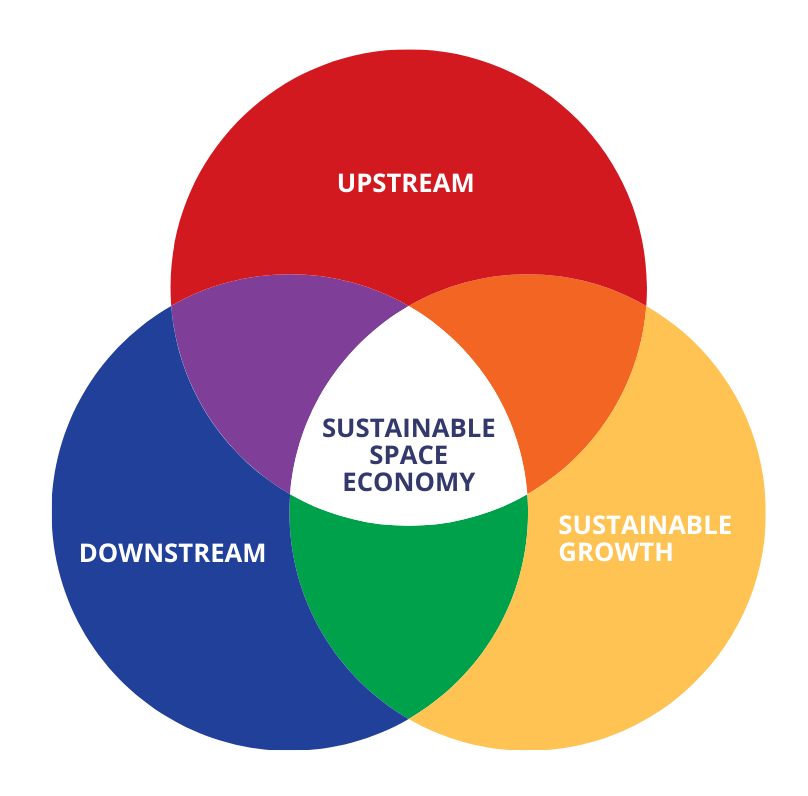
UPSTREAM
Building the tools and infrastructure to access and to operate in space.
xx
DOWNSTREAM
Turning capabilities from upstream into services, data and experiences that benefit Earth and humanity.
xx
SUSTAINABLE GROWTH
Sustainable growth is the ability to scale social, environmental, and economic benefits. All three matter. All three are connected.
All of these are important, but economic growth is the engine.
If that engine is weak, there is no scale, no stability, and no capacity to invest in social or environmental progress.
When done responsibly, economic growth isn’t the opposite of sustainability – it’s the prerequisite.
LEVERAGING THE NEW SPACE RACE FOR SUSTAINABILITY ON EARTH
Space can play a crucial role in achieving a climate-neutral economy, global energy targets, Sustainable Development Goals (SDGs) and the Paris Agreement’s goals.

Source: The United Nations
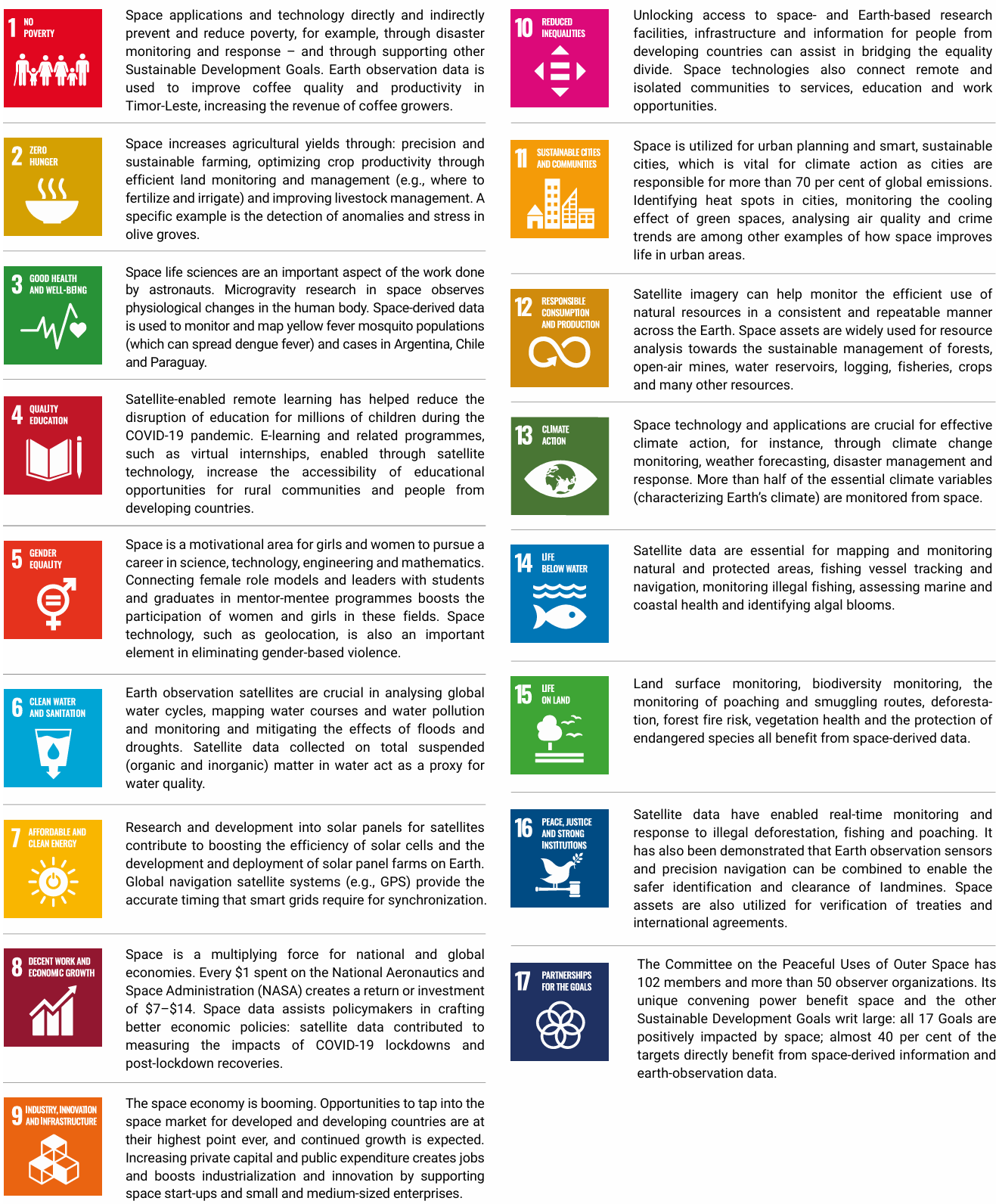
Source: The United Nations
LEVERAGING THE NEW SPACE RACE FOR SUSTAINABILITY IN SPACE
Sustainable practices – such as reducing space debris and avoiding hazardous chemicals – are essential to preserve long-term benefits.
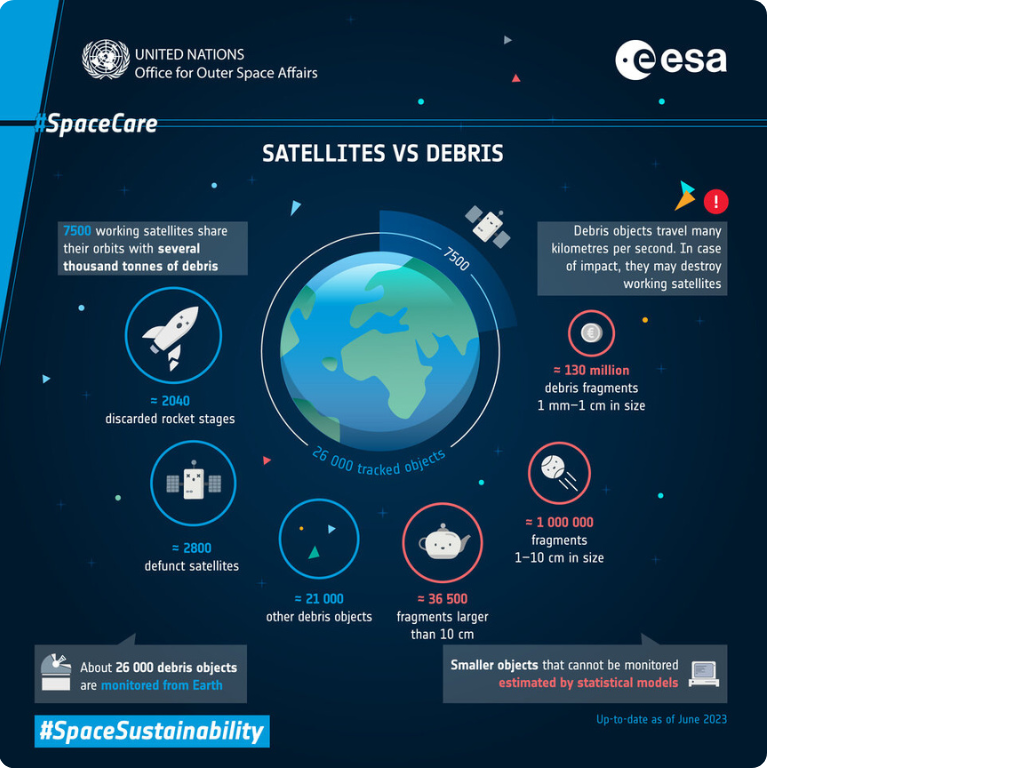
Source: The European Space Agency
(4) HOW DOES SUSTAINABILITY BENEFIT BUSINESS?
CEOs were asked about the most important outcomes that their transformation initiatives are trying to achieve in the next 12 months.
CEOs prioritize enhancing customer and employee engagement and retention, while also optimizing operations, as the most important outcomes of the transformation.
Achieving sustainability targets was placed as the 6th business priority for CEOs but based on the numerous studies being sustainable is the key to unlock all key priorities.
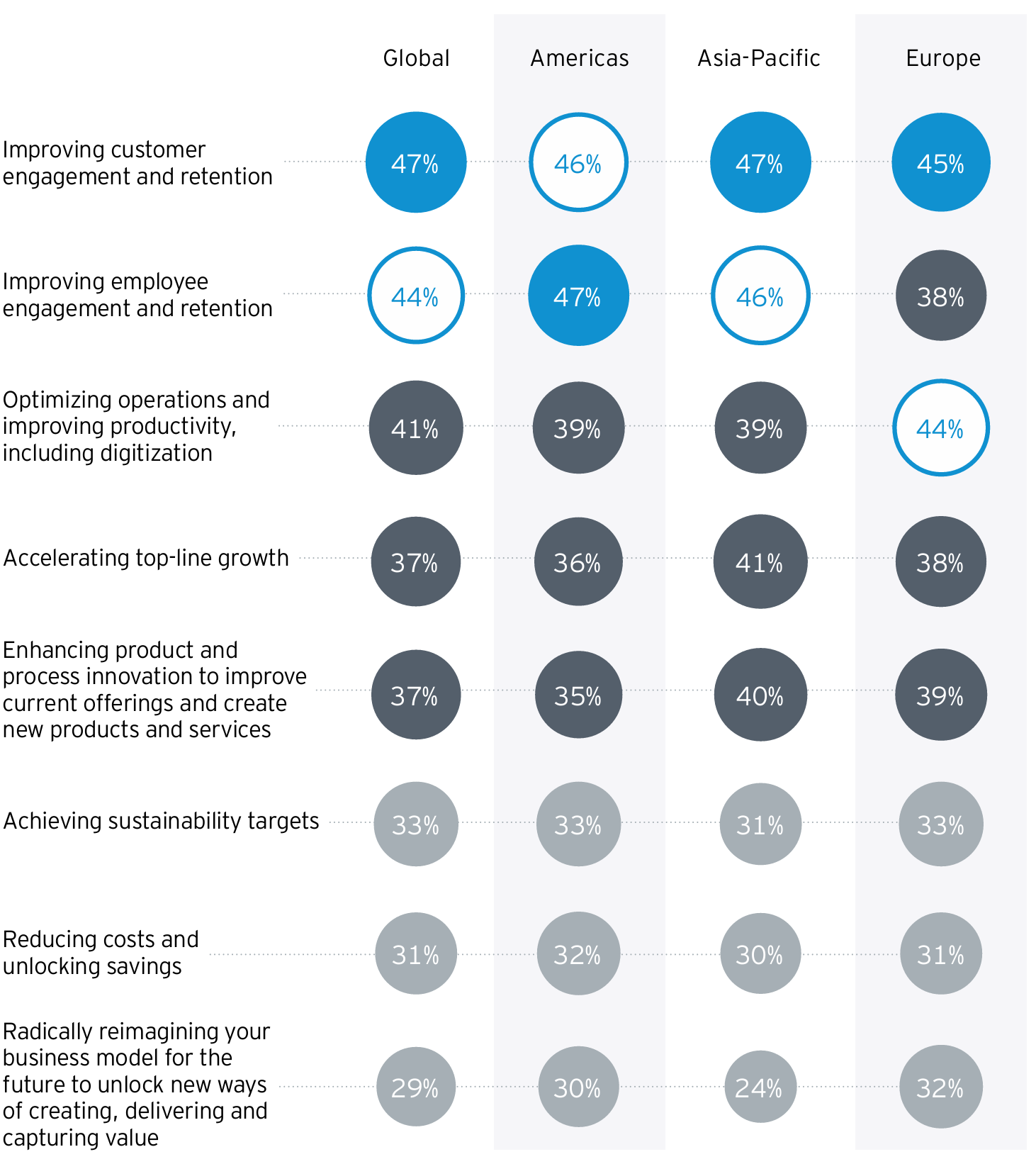
Source: How can a strategic transformation mindset unlock long-term value? EY-Parthenon CEO Outlook Survey January 2025.
The key is to embed sustainability deeply within business processes, making it a fundamental part of how the organisation functions.
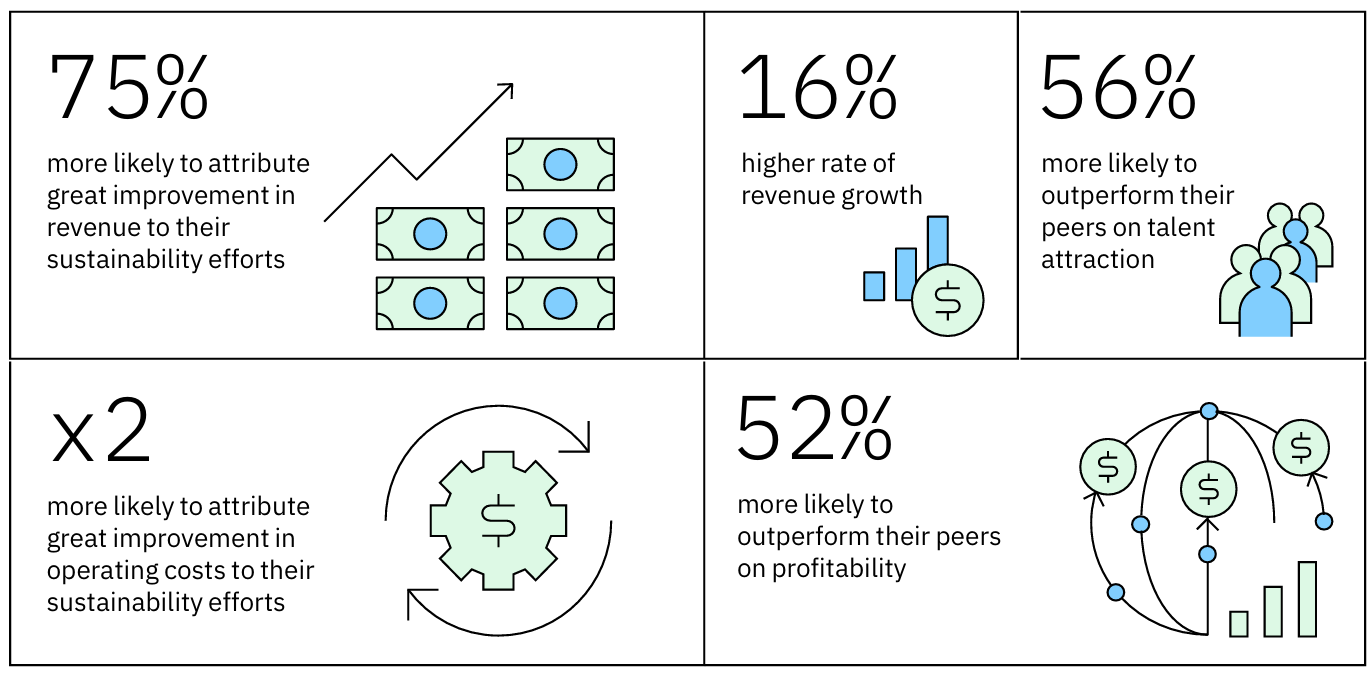
Source: IBM – Beyond checking the box – How to create value with embedded sustainability.
(5) THE KEY CHALLENGES WITH SUSTAINABLE GROWTH?
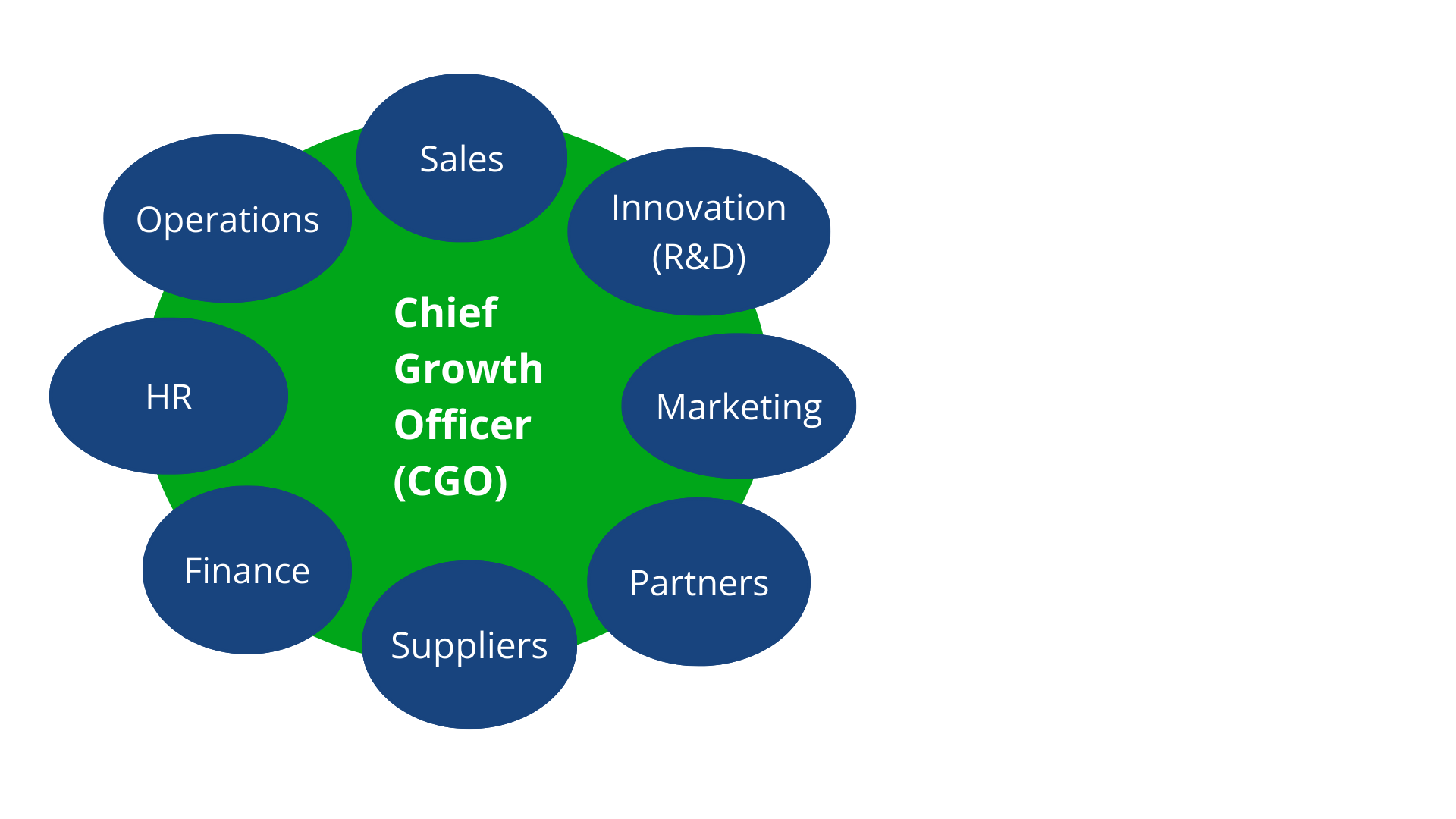
Sustainable growth is not the responsibility of a single department – it’s a company-wide transformation that demands successful change management across the organisation.
According to Oak Engage’s 2023 Change Report, 40% of employees mistrust their organisation’s ability to navigate change.
WTW’s 2023 survey reinforces this concern. Only 43% of employees say their organisation is good at managing change, down from nearly 60% in 2019. Even more striking, just 25% believe senior leaders excel at managing change.
When every function is engaged, sustainable growth becomes more than a goal – it becomes a strategic lever for resilience, innovation, and long-term profitability.
Copyright ©
Sustainable Space Economy (SSE)

2022 – 2026